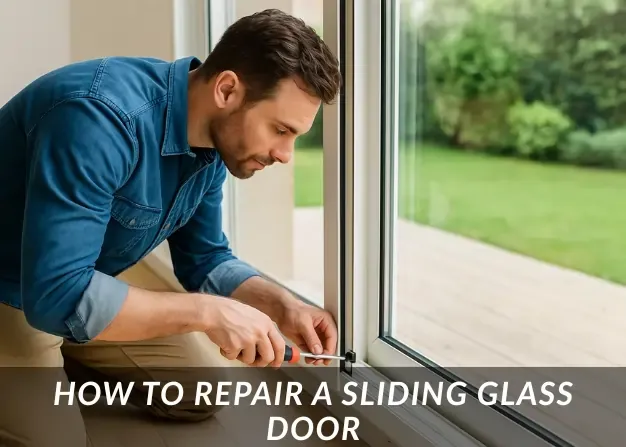
A sticky, noisy, or misaligned sliding glass door can quickly go from a minor annoyance to a major household headache. Whether you’re dealing with a door that won’t close properly, drags along the track, or has worn-out components, the good news is most sliding door issues are repairable—with or without a contractor.
In this complete guide, you’ll learn how to repair a sliding glass door, identify the most common issues, and get step-by-step solutions to restore its smooth, secure operation.
Common Sliding Glass Door Problems (And What Causes Them)
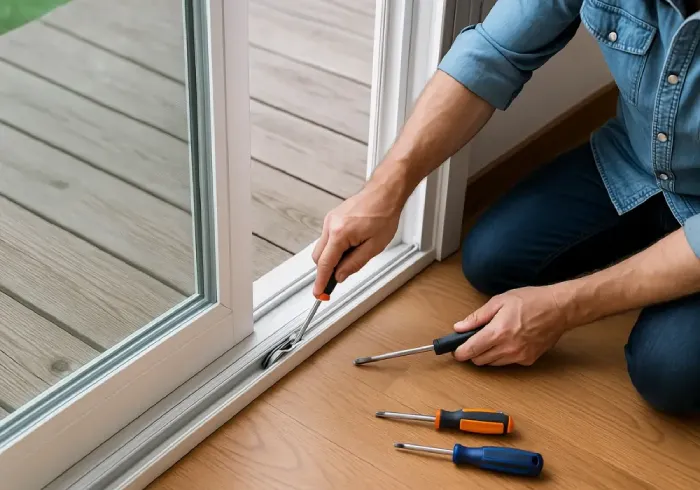
Before jumping into repairs, it’s important to recognize what’s actually wrong with the door. Here are the top issues homeowners face:
| Problem | Likely Cause |
|---|---|
| Door sticks or is hard to slide | Dirt in track, worn rollers, misalignment |
| Door wobbles or rattles | Loose hardware or damaged frame |
| Doesn’t lock securely | Misaligned latch or worn strike plate |
| Drafts or water leaks | Damaged weather stripping or faulty seals |
| Foggy or cracked glass | Broken insulated glass unit (IGU) or impact damage |
Tools You’ll Need for Most Sliding Door Repairs
- Screwdrivers (flat and Phillips)
- Silicone spray lubricant
- Vacuum or compressed air
- Denatured alcohol or vinegar-based cleaner
- Putty knife or scraper
- Replacement rollers, weatherstripping, or latch parts
- Suction cups (for glass removal)
- Painter’s tape (for added glass safety)
- Paraffin wax (for lubricating tracks)
Step-by-Step: How to Fix a Sliding Glass Door
1. Clean and Lubricate the Track
Fixes: door dragging, rough movement, squeaking
- Vacuum all debris from the bottom and top tracks. Pet hair, sand, and dirt are the most common culprits.
- Scrub stubborn grime using a toothbrush and denatured alcohol.
- Lubricate the top track with silicone spray and apply paraffin wax to the bottom track. This creates a lasting glide that won’t attract dust.
Pro Tip: Never use WD-40—it attracts dirt and gums up the rollers over time.
2. Adjust or Replace the Rollers
Fixes: dragging door, door won’t stay on track, imbalance
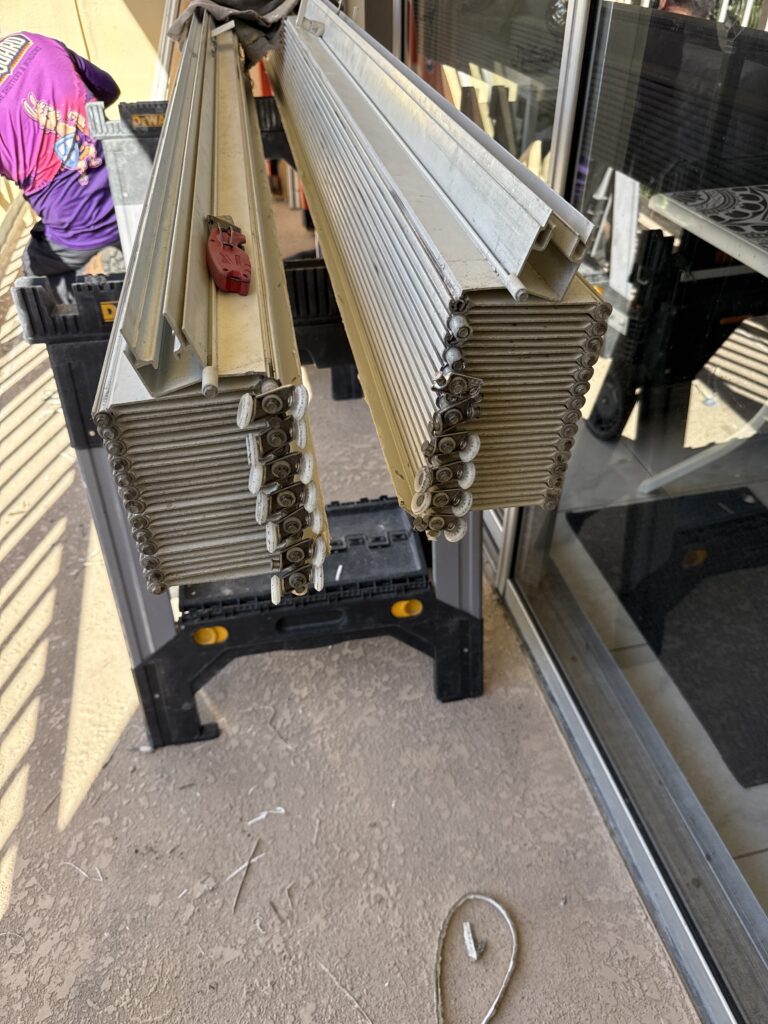
- Remove the sliding door from its track. This often requires unscrewing the head stop and adjusting the roller screws to lower the door.
- Place the door on padded sawhorses.
- Locate the rollers at the bottom, unscrew and inspect them. If they’re worn, flat, or cracked, replace them.
- Install new rollers and adjust their height to re-balance the door once reinstalled.
Many problems that seem like “track damage” are actually worn-out rollers.
3. Fix Alignment Issues
Fixes: door grinding on frame, won’t latch properly
- Check the alignment between the top and bottom rollers.
- Use a screwdriver to adjust the roller height evenly.
- Test door motion. It should slide smoothly and stay flush with the jamb.
If misalignment persists, remove the door and reinsert it carefully. Make sure the top rollers seat correctly before positioning the bottom into place.
4. Repair or Replace the Lock
Fixes: broken or loose latch, door won’t secure
- Remove the interior handle and lock housing.
- Inspect the strike plate and latch hook. If misaligned, shift the strike plate slightly and re-tighten.
- Replace the locking mechanism if rusted or stripped. Most sliding door locks can be swapped without replacing the full door handle.
Security tip: Upgrade to a keyed lock or a foot bolt for extra protection.
5. Replace Weather Stripping
Fixes: air leaks, water infiltration, rattling panel
- Pull off the old weather stripping using a putty knife.
- Clean any glue residue from the door surface.
- Install new weather stripping following the manufacturer’s orientation.
- Press or screw in place for a tight seal.
For doors exposed to storms, consider upgrading to vinyl or dual-fin seals for extra durability.
6. Fix or Replace the Glass Panel
Fixes: fogged, cracked, or shattered glass
- If the seal in a dual-pane door is broken, the glass cannot be “defogged”—it must be replaced.
- Contact a glass professional to measure and order a new insulated glass unit (IGU).
- If you’re experienced with glazing, you can remove the trim, pull the panel, and re-glaze it yourself. But this is not a beginner-level DIY task.
Pro Glass Tip: Glass replacement often costs less than full door replacement—get quotes for both to compare.
7. Repair the Screen Door
Fixes: torn mesh, sagging, hard to move screen
- Remove the screen door by lifting it off the bottom track.
- Lay it flat on a workbench.
- Remove the spline and damaged mesh.
- Install new screen mesh and roll in a new spline with a spline tool.
- Trim the excess and reinstall.
Clean the screen track while it’s off to prevent future sliding issues.
When to Replace Instead of Repair
You may be better off replacing the entire sliding door if:
- The frame is cracked, rusted, or warped
- Glass is severely damaged or custom-sized
- Hardware is no longer available for your door model
- The cost of parts exceeds the price of a new energy-efficient unit
Most modern patio doors are better insulated, safer, and easier to operate. Replacing your unit can also boost curb appeal and home value.
Preventative Maintenance Tips
- Clean door tracks monthly to avoid roller damage
- Lubricate tracks and rollers twice a year
- Keep weather stripping in good condition
- Don’t slam or drag the door
- Make minor adjustments before issues get worse
Final Thoughts
You don’t have to live with a stubborn sliding door or rush into a full replacement. With a few basic tools and this guide, you now know how to repair a sliding glass door the right way. From misaligned rollers to damaged locks and worn seals, most fixes are manageable—even for beginners.
Need help with a custom door, replacement panel, or professional-grade rollers? Contact Pacific Hurricane Shutters or Call at (786) 320-6405 we’ll help you find the perfect solution for your home and budget.