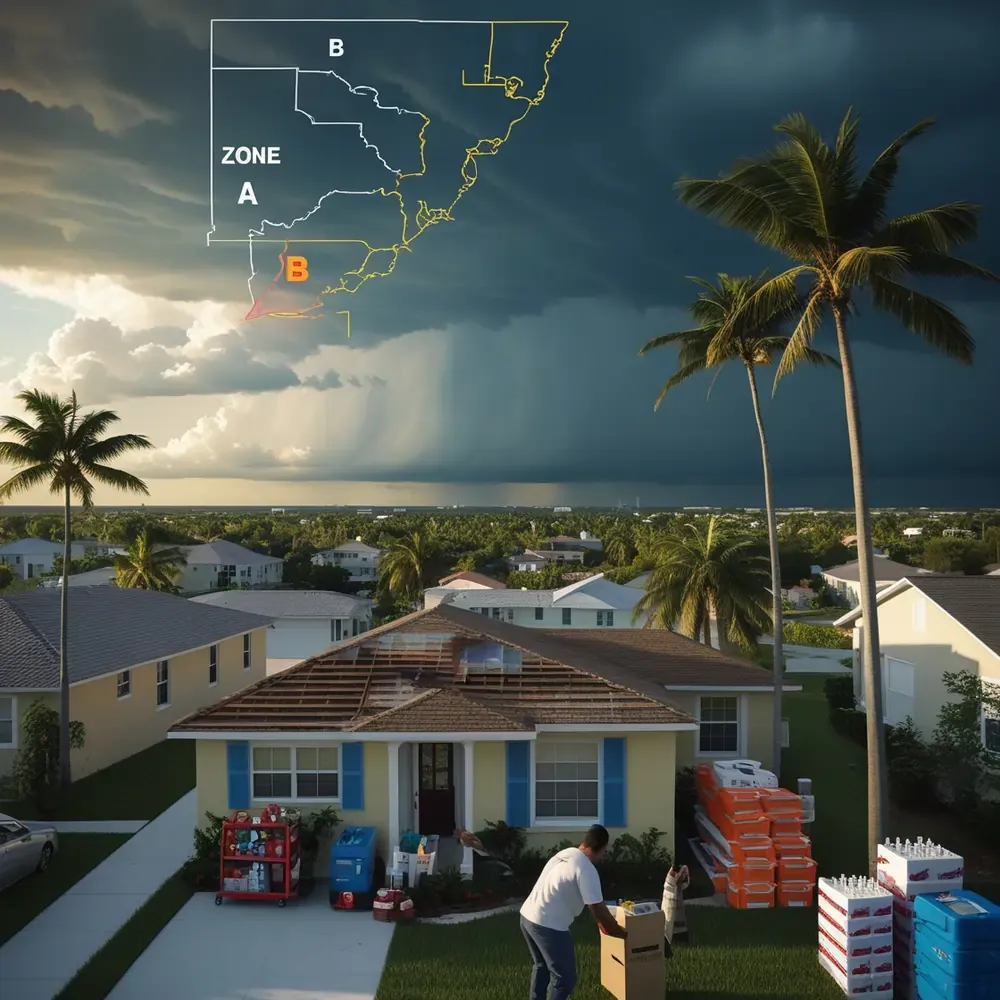
Miami-Dade County uses Storm Surge Planning Zones labeled A through E. The County defines one as an area that could be affected by a storm surge of 1 1/2 feet or higher during a hurricane. They plan for storm surge only. They are not flood zones, wind ratings or proof that a building is safe to stay in. Officials decide who actually leaves.
Please read this first. This page is general planning information, not an evacuation order. Check your address in Miami-Dade’s official Storm Surge Planning Zone Finder, sign up for County alerts, and follow current instructions from local officials. Mobile-home residents and people who rely on electrically powered life-sustaining medical equipment should follow the County’s special evacuation guidance regardless of planning zone.
- Miami-Dade Storm Surge Planning Zone Finder
- Miami-Dade Storm Surge page
- Miami-Dade Evacuation Orders map
- Sign up for Miami-Dade Alerts
Storm surge planning zones are not flood zones or wind ratings
Three different things get mixed up:
- Storm surge planning zone. Where ocean water pushed inland could reach. Miami-Dade says these zones deal strictly with storm surge, not your flood zone.
- FEMA flood zone. A separate map used for flood risk and lending.
- Wind and structural safety. A building question. Miami-Dade states that you still need to determine if your home is safe to remain inside during a hurricane.
A home outside every surge zone can still be unsafe in wind. A home in Zone A can be sound and still have to leave because of water.
The five zones: A through E
Miami-Dade describes five zones in these current terms:
- Zone A is at greatest risk for storm surge for Category 1 and higher storms
- Zone B is at risk for storm surge for Category 2 and higher storms
- Zone C is at risk for storm surge for Category 3 and higher storms
- Zone D is at risk for storm surge for Category 4 and higher storms
- Zone E is at risk for storm surge from Category 5 storms
The County draws the zones from Sea, Lake and Overland Surge from Hurricanes (SLOSH) model grids. Areas along canals and further inland can also be at risk, so look up your own address on the official zone finder instead of guessing from a neighborhood name.
What determines an actual evacuation order
The letter is a planning label, not an instruction. Miami-Dade explains that each zone or portion of a zone will be evacuated depending on the hurricane’s track and projected storm surge, independent of the hurricane’s category.
The County describes two instructions. An evacuation recommendation may go to residents with personal risk, such as people who need extra time or who live in flood-prone areas outside surge zones. An evacuation order is issued by the Mayor for specific areas based on track and projected surge, and it can cover whole or partial zones. Know your zone in advance and act on the current official order for your address, not on the letter alone.
Check your address, alerts, evacuation centers and transport
- Write your zone from the finder above into your household plan, and register for Miami-Dade Alerts.
- Read the County’s Emergency Evacuations page for how orders are announced and how centers work. The County calls those centers a shelter of last resort and suggests staying with family or friends inland when you can.
- If someone at home needs specialized transportation, review the County’s Emergency and Evacuation Assistance Program before hurricane season.
- Follow the National Hurricane Center and the County’s Hurricanes hub.
Build and maintain a current household plan and supply kit
Miami-Dade says supplies should be stocked by June 1, the start of hurricane season. Its Kits and Checklists page lists a “7-day supply of non-perishable foods” and a “7-day supply of water (one gallon per person per day, including pets)” plus a manual can opener, a battery-powered radio, flashlights, first aid, medications, cash and copies of important documents. Use that list as written and check it once a year.
Protect openings before a storm is approaching
On its Before a Hurricane page the County says windows and doors should be secured with County-approved storm shutters or by boarding up windows with 5/8-inch plywood.
Protection only counts if it is installed and approved for that opening, so inspect it and practice closing it well before a storm is in the forecast. Approval and permitting are specific to the product, the opening and the jurisdiction, so check the current Florida Product Approval search and your local permit requirements for that exact product. Our guides to shutter permits and HVHZ code and to sliding glass doors go deeper.
Long-term home protection options
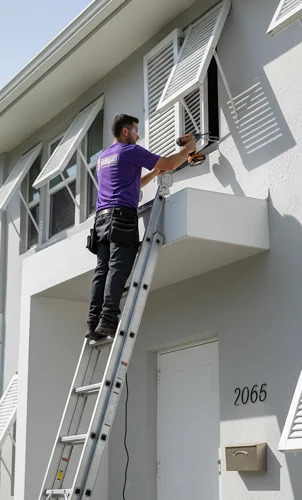
For long-term opening protection, compare DreamGuard’s approved installation paths before a storm is approaching. We install four things:
- Accordion hurricane shutter installation
- Roll-down hurricane shutter installation, impact rated by design
- Impact window installation
- Impact door installation
Background: hurricane shutters and impact windows and doors. Opening protection is an off-season building decision. It is never a substitute for knowing your storm surge planning zone and following official orders.